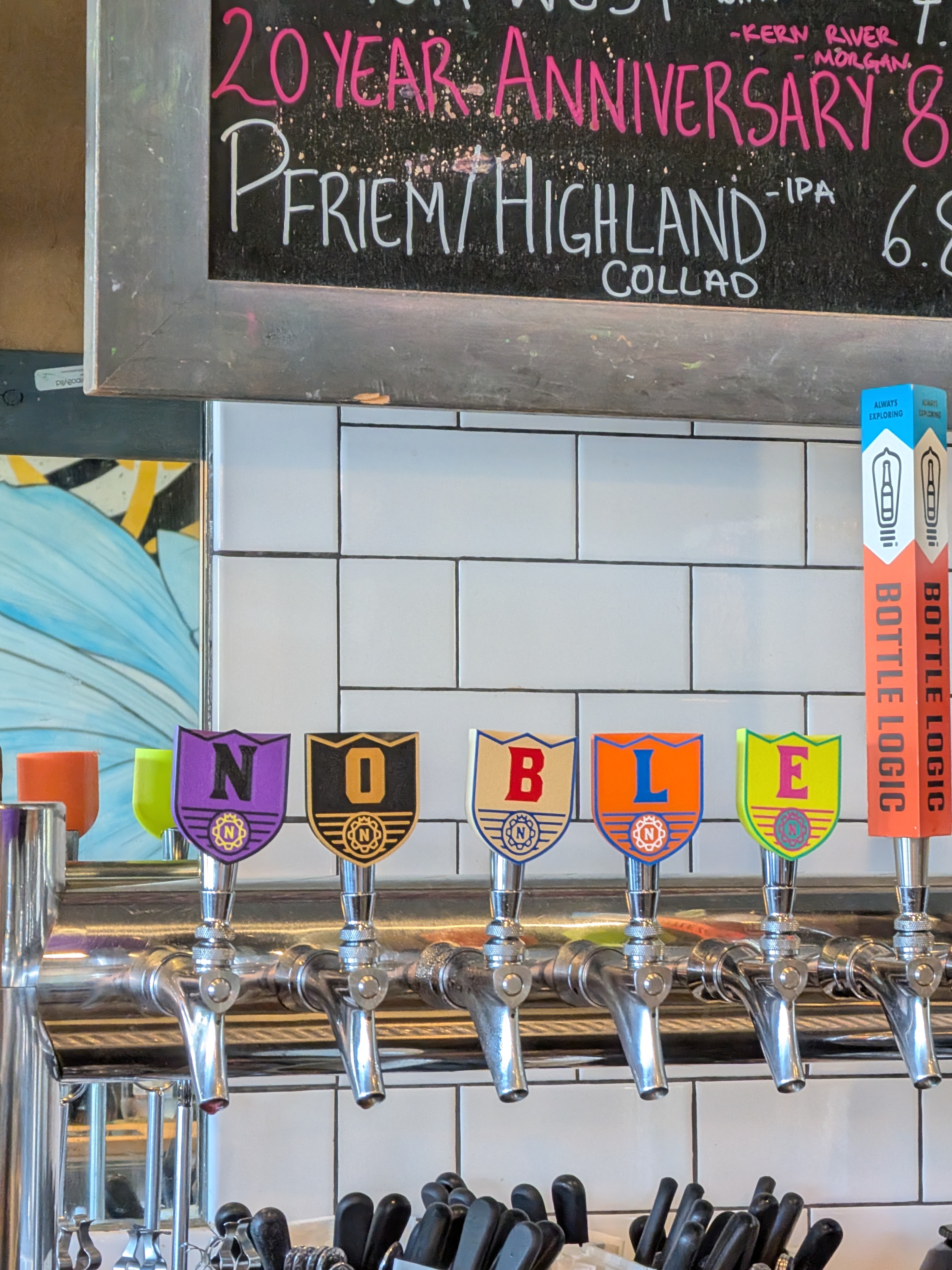
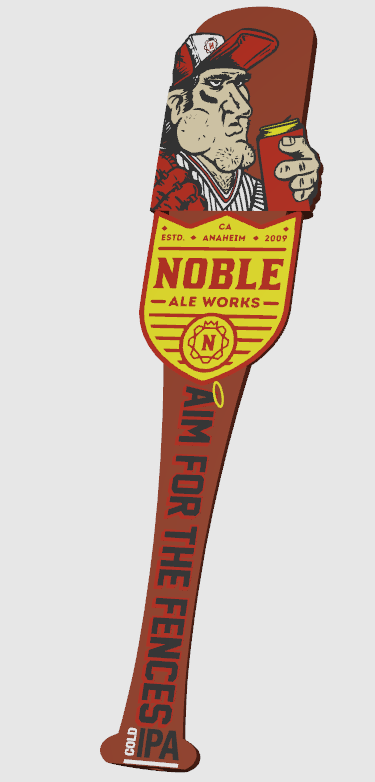
I know I’ve been a little quiet here lately, aside from a small tap-handle batch release and the occasional update. Life, kids, work, and a side hustle all compete for the same limited supply of time. Some projects move forward in whatever hours are left over. This has been one of them.
Rewind more than a year and a half, and I was working through an idea for GarageCraft3d: a customer-facing customization system that could take someone’s tap-handle design choices and move them toward manufacturing without manually rebuilding the same workflow for every order. More importantly, I wanted that work to happen locally, on hardware I could bring to a farmers market or maker event, without depending on the cloud.
That idea is now running on the actual kiosk hardware. The setup is a Raspberry Pi 4B with a touchscreen connected over a local network to an NVIDIA Jetson Orin Nano Super with 8GB of memory and a 256GB high-speed SSD. The Pi provides the customer interface, while the Jetson handles the processing behind it.
The customization and job-processing workflow runs completely offline, with no cloud dependencies.
That is the part I want to emphasize. AI-assisted development does not have to result in a cloud-dependent product. I used AI to help develop and troubleshoot the software, but the software does not need to send every customer interaction back to a large, remotely hosted model to perform its job.
Building the system and running the system are different workloads. During development, there are requirements to work through, code to write, integration problems to solve, and things to test. During a customer order, the task is much more specific: collect their choices, process the customization, generate a proof, and organize the job for the next manufacturing step. I do not need the kiosk to solve every possible problem. I need it to handle this particular job well.
During the latest workshop test, I entered a customization through the Pi touchscreen and submitted it. The job reached the Jetson and generated a design proof in the production queue. After all the starts, stops, and late-night troubleshooting, seeing that handoff work on the intended hardware was a significant milestone.
For a farmers market or maker event, this is a practical requirement. I do not want someone’s ability to customize a product to depend on venue Wi-Fi, a phone hotspot, or a remote service being available. The customer is standing at the booth. The equipment is at the booth. The processing can happen there, too.
The purpose is to make custom ordering easier for the customer while reducing the repetitive work behind it. Someone should be able to explore the options, enter their wording, and see a proof without needing to understand the software or manufacturing process underneath. On my side, I want those choices carried forward accurately instead of repeatedly transferring them between tools.

We are now building out the product-specific customization around our established tap-handle styles, including their actual usable geometry, artwork placement, text, and font options. That work connects the interface to the physical products it is meant to support as we prepare for market deployment. Oh and I am working on direct to laser engrave workflows at the same time…
There is a longer-term website application here as well. I want to bring the same product logic into online customization, while keeping the booth capable of operating independently. An online ordering channel should expand where customers can reach us, not become a requirement for serving the person standing in front of us.
For GC3D, this is about making a small manufacturing operation more capable with hardware sized for the work. AI helped with development. The actual job runs locally.
A year and a half later, that is the update worth sharing: a Raspberry Pi, a Jetson, and a useful workflow that does not need the cloud to get the job done and is one heck of an upgrade over my old google forms intake pipeline…

Cheers,
-Nick@GC3D